
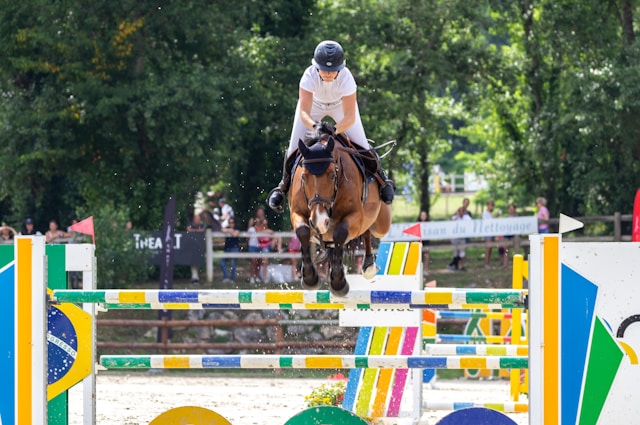
Building Confidence, Not Chaos: Tips for Designing Safe and Effective Horse Jump Courses
Horse jump courses are essential in competitive equestrian events, requiring riders to navigate specific lines and distances while maintaining pace and control. These courses range from verticals and oxers to water obstacles and test horse and rider skill, precision, and agility. Understanding the layout and flow of a course is crucial for strategic decisions, such as where to collect or extend the horse’s stride. Mastery of horse jump courses showcases athleticism, teamwork, and the artistry and strategy that define competitive show jumping and cross-country disciplines. Utilizing appropriate horse jump cups ensures the secure placement of rails and enhances the safety and reliability of these challenging courses.
Choosing the Right Types of Jumps
The types of jumps you select will significantly influence the training and performance of your horse. From cross-rails to oxers, every kind of jump serves a specific purpose. Cross-rails are ideal for beginners, helping horses learn the basics of jumping. Verticals and oxers provide more of a challenge for seasoned riders, testing both vertical and width clearance. Understanding the purpose and difficulty of each jump type helps create a balanced course that progresses in difficulty and helps in comprehensive training.
Types of Jumps and Their Purposes
- Cross-Rails: These are two poles crossed in the center. They’re perfect for beginners as they encourage the horse to jump in the middle, where the poles are the lowest.
- Verticals: Single poles set at various heights. These jumps test the horse’s ability to clear height and are a staple in most courses.
- Oxers consist of poles set parallel at different heights or the same height. They’re designed to test both height and width, adding a layer of complexity to the jump.
Materials Needed for Building Jumps
To ensure the durability and security of your horse jump course, choose high-quality materials like wooden poles, PVC pipes, and robust horse jump cups. Wood offers a classic appearance but requires regular maintenance to prevent decay. PVC pipes are lightweight and require less maintenance but may offer less stability. Investing in premium materials reduces replacement frequency and ensures the course’s reliability, even though they may be initially more expensive.
Safety Considerations
When setting up a horse jump course, safety is the most important factor to consider. The stability of the jumps and the layout of the course are crucial in preventing accidents. It’s essential to properly space the jumps and securely anchor them to the ground. Furthermore, ensure that the ground is free from debris and the jumps are not placed in areas with poor footing. Accidental tipping of jumps can lead to serious injuries. By securely anchoring jumps to the ground, you can prevent tipping while allowing poles to fall easily if knocked. This balancing act minimizes the risk of injury to both the horse and rider, ensuring that the jumps serve their intended training purpose without creating unnecessary hazards.
Designing the Course Layout
Your horse jump course layout should challenge the horse while maintaining safety. Mixing different types of jumps and varying the spacing can help simulate real competition scenarios. A well-designed layout encourages the horse to think and react quickly, fostering agility and confidence. Consider the flow of the course to ensure smooth transitions between jumps, which helps maintain rhythm and pace during training sessions.
Critical Elements in Course Design
- Variety: Include different jumps to test various skills and keep the training enjoyable for both horse and rider.
- Spacing: Proper distances between jumps are crucial to mimic competitive scenarios and ensure safety during training.
- Flow: A smooth flow throughout the course allows the horse and rider to maintain rhythm and pace, which is essential for practical training and competition performance.
Course Maintenance Tips
Maintaining your horse jump course regularly is vital to ensure safety and efficiency. It involves checking for wear and tear, especially in adverse weather conditions, and conducting regular inspections and repairs. Checking for loose components, damaged poles, or unstable anchors can prevent significant issues. Periodic inspections also prevent accidents and ensure the course is in top condition for training. Establishing maintenance routines, including checks after training sessions and comprehensive assessments, can prolong the course’s life.
Training with Your Horse
A well-designed horse jump course is essential for developing skills for competition. Consistent practice on varied obstacles enhances agility, confidence, and problem-solving abilities. Gradually increasing the complexity of the course helps prevent overloading the horse and builds confidence. Start with more straightforward jumps like cross-rails and gradually incorporate more complex obstacles like verticals and oxers. This method builds trust, improves technique, and helps the rider identify and correct issues early, ensuring a smoother training experience.
Troubleshooting Common Issues
Even with the best planning and execution, you may encounter issues such as the horse’s refusal to jump or poor technique. Identifying the root cause—a design flaw or a training discrepancy—is crucial for improvement. Sometimes, a horse’s reluctance to jump can be solved by slightly modifying the course layout or jump types to suit its current skill level better. Ensuring the course is appropriately challenging without overwhelming is crucial in maintaining the horse’s enthusiasm and confidence.
Addressing Common Problems
- Refusal to Jump: Ensure the jump is manageable for the horse. Check for any possible physical discomfort or fear that the horse might have developed due to previous negative experiences.
- Poor Technique: Focus on improving basic skills by simplifying the course. Going back to basics can help in reinforcing good behavior and technique.
- Inconsistent Performance: Regular and varied training can help achieve consistency. Vary the types of jumps and their placements to keep the training dynamic and engaging for the horse.

